

Why Nonprofits Keep People Poor, And What Actually Works
The Nonprofit Industrial Complex: Why Charity Keeps People Poor
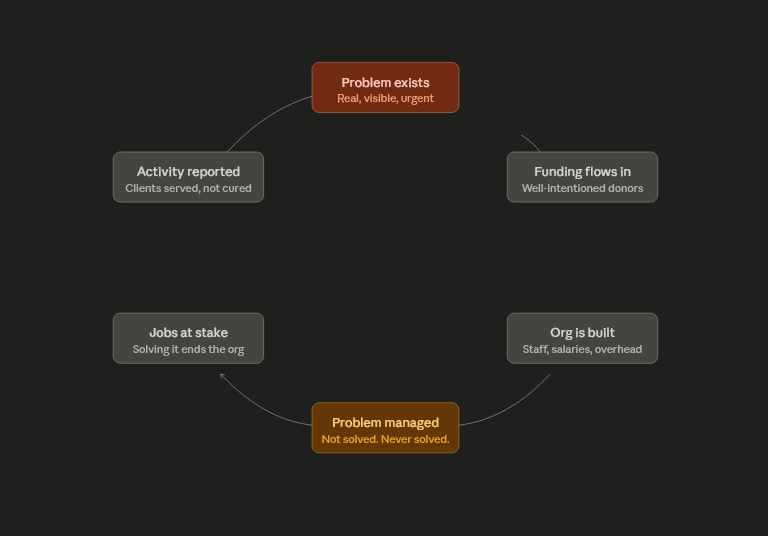
A solved problem kills the organization. Staff lose jobs. Executives lose six-figure salaries. Funders lose a portfolio asset. The incentive at every level is for the problem to persist, and it does.
The U.S. nonprofit sector raises over three trillion dollars a year. Poverty rates have not meaningfully moved in decades. That is not a failure of effort. It is the system working exactly as structured.
Success is measured in activity, programs launched, dollars raised, clients served. Not in outcomes. Not in whether anyone's life is permanently different. The metric is motion, not change.
Communities become dependents in a relationship they never chose. Resources arrive pre-decided, with conditions attached. Local knowledge is ignored. People who understand their own lives best have no power over the money meant to help them.
Direct cash transfers to individuals consistently outperform programmatic aid. Community-controlled funds build equity. Cooperatives create lasting ownership. The pattern is clear: durable change happens when the community holds the money, not the organization that claims to represent them.
What actually works
Give a man a house and you've given him bills. Teach him to build and he can house a street.
Invest in trade skills, apprenticeships, and vocational education rooted in the community. Not certificates for resume, real, transferable capability that generates income and multiplies.
Feed a family for a day or fund the plot that feeds the block for a decade.
Community land, shared gardens, and cooperative food production create food security that no food bank can match. Ownership changes the relationship to the resource entirely.
A loan with conditions keeps you borrowing. Equity means you never need to ask again.
Microequity over microloan. Give people a stake in something that grows, a cooperative, a community trust, a shared enterprise. Debt creates dependency. Ownership breaks it.
The mentor who grew up on that street is worth ten consultants who visited it once.
Stop importing expertise. Pay the people already inside the community to lead, teach, and build. They know what's needed. They have skin in the outcome. That's not a nice idea, it's the only model that has ever produced lasting results.
Ask any nonprofit one question:
What happens to your organization when you succeed? If there's no clear answer, now you know where the money is really going.