AI and Commercial Real Estate: Finding Opportunity Beyond Data Centers
AI Is Changing Commercial Real Estate. I'm More Interested in What Happens Around It.
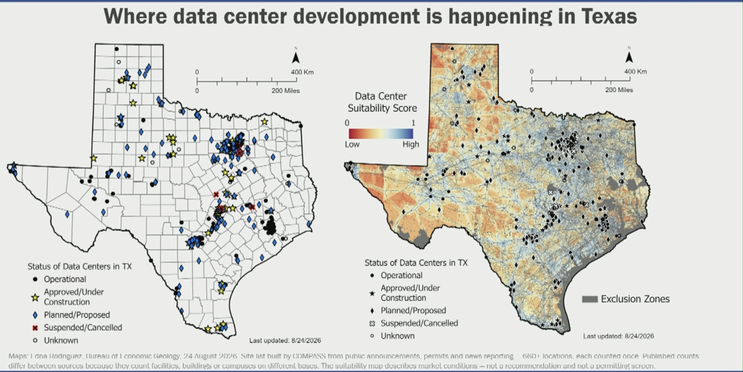
Artificial intelligence is quickly becoming one of the biggest drivers of change in commercial real estate. Data centers are popping up in conversations everywhere, power demand is climbing, and developers are looking for land, infrastructure, and buildings that can support the growing appetite for computing power.
There is a lot of excitement around it. Some of it is justified. Some of it is probably people discovering a new acronym and deciding they're suddenly in the technology business.
But I think there is another way to look at this.
When everyone starts talking about data centers, the natural reaction is to focus on the buildings themselves. The enormous facilities, the billion-dollar investments, the major technology companies, and the developers with enough capital to make it happen.
That's fine. But I don't have to own the data center to benefit from the demand it creates.
Think about everything that has to happen before one of those facilities can operate.
Land. Electrical infrastructure. Power availability. Industrial buildings. Cooling systems. Warehousing. Fiber connectivity. Roads. Supporting businesses. Even properties that may become more valuable simply because of where they sit in relation to future development.
That's a much broader real estate conversation.
And it's the one I'm paying attention to.
I'm looking at AI from two different directions.
First, how it changes the value of real estate itself. A building that was once valued primarily on its location, rental income, and condition may have an entirely different set of considerations tomorrow. Power capacity, connectivity, operating efficiency, and adaptability are becoming increasingly important.
Second, how AI changes the business of owning and operating property. Better underwriting, more efficient property management, predictive maintenance, and improved operating decisions can all affect the numbers. And in real estate, the numbers tend to matter a little more than the sales pitch.
So what am I doing with this information?
I'm paying closer attention to industrial properties, underutilized buildings, land with infrastructure potential, and locations where future power and development demands could change the equation.
I'm also looking at how AI can help me evaluate deals, identify overlooked opportunities, and operate properties more efficiently.
I'm not trying to predict exactly which company will win the AI race. I'm trying to understand what that race will require from the physical world, and where real estate fits into that equation.
There is a difference between chasing a trend and understanding the economic activity behind it.
I don't need to compete with billion-dollar data center developers. I need to recognize the opportunities that their investments may create for everyone else.
That might mean buying a property before its surroundings change. It might mean repositioning an existing building. It might mean recognizing that a piece of industrial land has more potential than its current use suggests.
Or it might mean passing on a deal because the numbers don't work, regardless of how exciting the story sounds.
That's part of the process, too.
AI is changing commercial real estate. I'm not interested in pretending I know exactly how it all plays out.
I'm interested in watching where the money goes, understanding what it creates, looking at the physical assets required to support it, and making decisions based on facts rather than excitement.
Because at the end of the day, technology may change the world, but somebody still has to own the land, the buildings, the infrastructure, and the real estate underneath it all.
And that's where I'm looking.